Quick contact info

Gabbro Crusher is a truly professional industrial company built to last. We deliver reliable gabbro crushing solutions for construction, infrastructure, and large-scale engineering projects.

icon_widget_image Monday-Saturday: 10 am to 6pm icon_widget_image H.O: Ground Floor, 50D, Muktaram Babu Street, Kolkata - 700 007 icon_widget_image +91 7004 247 461 +91 7644 940 911 icon_widget_image info@gabbrocrusher.com vikash@gabbrocrusher.com
vsi crusher manufacturer in india- vsi crusher manufacturers in india - vsi crusher manufacturer in Bhutan - vsi crusher manufacturers in Nepal
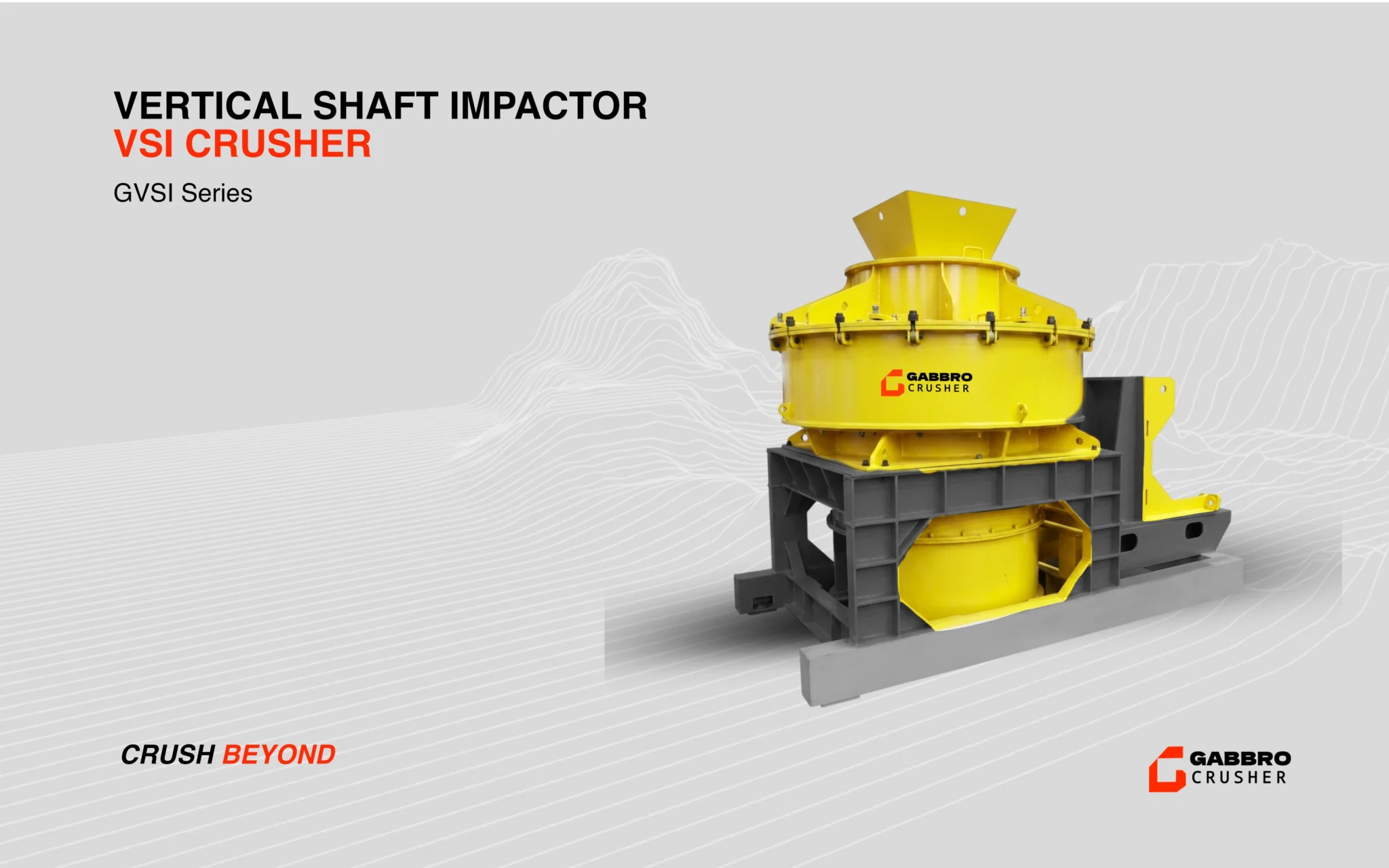
GVSI Series VSI Crusher Manufacturer India — Gabbro Crusher
VSI Crushing & Sand Making

GVSI Series
VSI Crusher

Vertical Shaft Impact Crusher for M-Sand & P-Sand Production

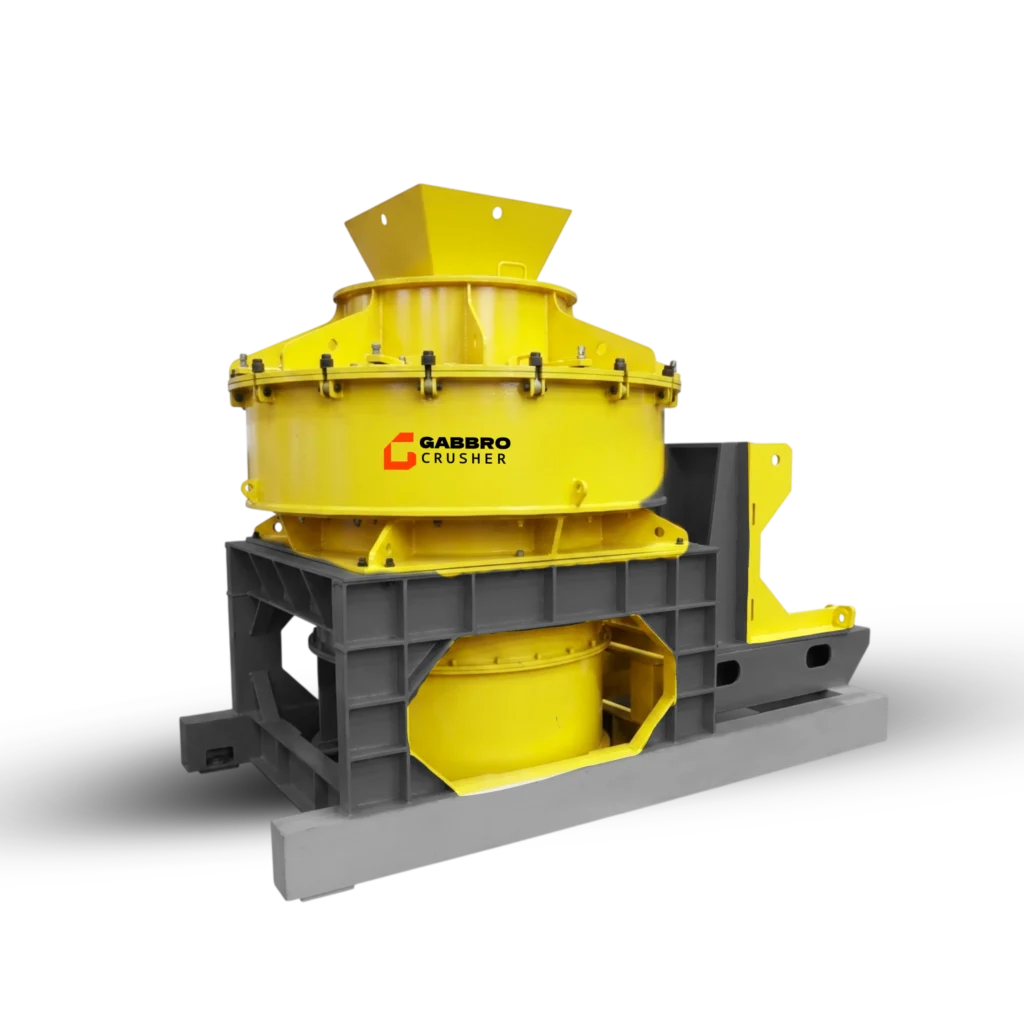
The GVSI Series VSI Crusher by Gabbro Crusher is a high-performance vertical shaft impact crusher engineered for manufactured sand production, aggregate shaping, and tertiary crushing in stone crusher plants. Using a high-speed rotor operating at 1500 RPM, the GVSI crushes feed material through rock-on-rock or rock-on-anvil impact — producing consistently cubical, well-graded particles that meet IS 383 standards for concrete and road construction.

Unlike jaw and cone crushers that produce elongated, flaky particles, the GVSI Series delivers superior particle shape with minimal over-crushing — maximising the value of every tonne processed. Its balanced rotor design ensures smooth high-speed operation with low vibration, reducing structural stress on plant foundations and extending bearing life in continuous 24/7 quarry operation.

As a leading VSI crusher manufacturer in India, Gabbro Crusher builds the GVSI Series for M-Sand and P-Sand plants requiring consistent output quality, low operating cost per tonne, and minimal downtime — serving quarry operators and aggregate producers across India, Nepal, and Bhutan.

Key Advantages of GVSI Series VSI Crusher

  • Produces premium M-Sand and P-Sand meeting IS 383 standards
  • Superior cubical particle shape — zero flaky or elongated output
  • High-speed 1500 RPM rotor for maximum impact crushing efficiency
  • Rock-on-rock crushing — significantly lower wear cost per tonne
  • Consistent gradation across all output sizes
  • Low maintenance — balanced rotor design reduces vibration
  • Suitable for granite, basalt, limestone, and river gravel
  • Ideal as tertiary stage after jaw and cone crusher circuit

Where Is GVSI VSI Crusher Used?

M-Sand Manufacturing Plants P-Sand Production Aggregate Shaping Concrete Production Road Construction Stone Crusher Plants Tertiary Crushing Glass Sand Production
Technical Data

GVSI Series VSI Crusher
Technical Specifications

All GVSI Series VSI Crushers are manufactured to order. Specifications are subject to change without notice. Contact Gabbro Crusher for custom configurations and capacity requirements.

Model Feeding Size Max (mm) Rotor RPM Speed Motor Capacity (HP) Capacity — M-Sand 3.5–4.5mm mesh (TPH) Capacity — Aggregates (TPH)
GVSI 30 20 1500 30 7 / 9 20
GVSI 50 20 1500 50 10 / 15 30
GVSI 100 20 1500 100 20 / 30 80
GVSI 150 20 1500 150 30 / 45 120
GVSI 250 25 1500 250 50 / 75 200
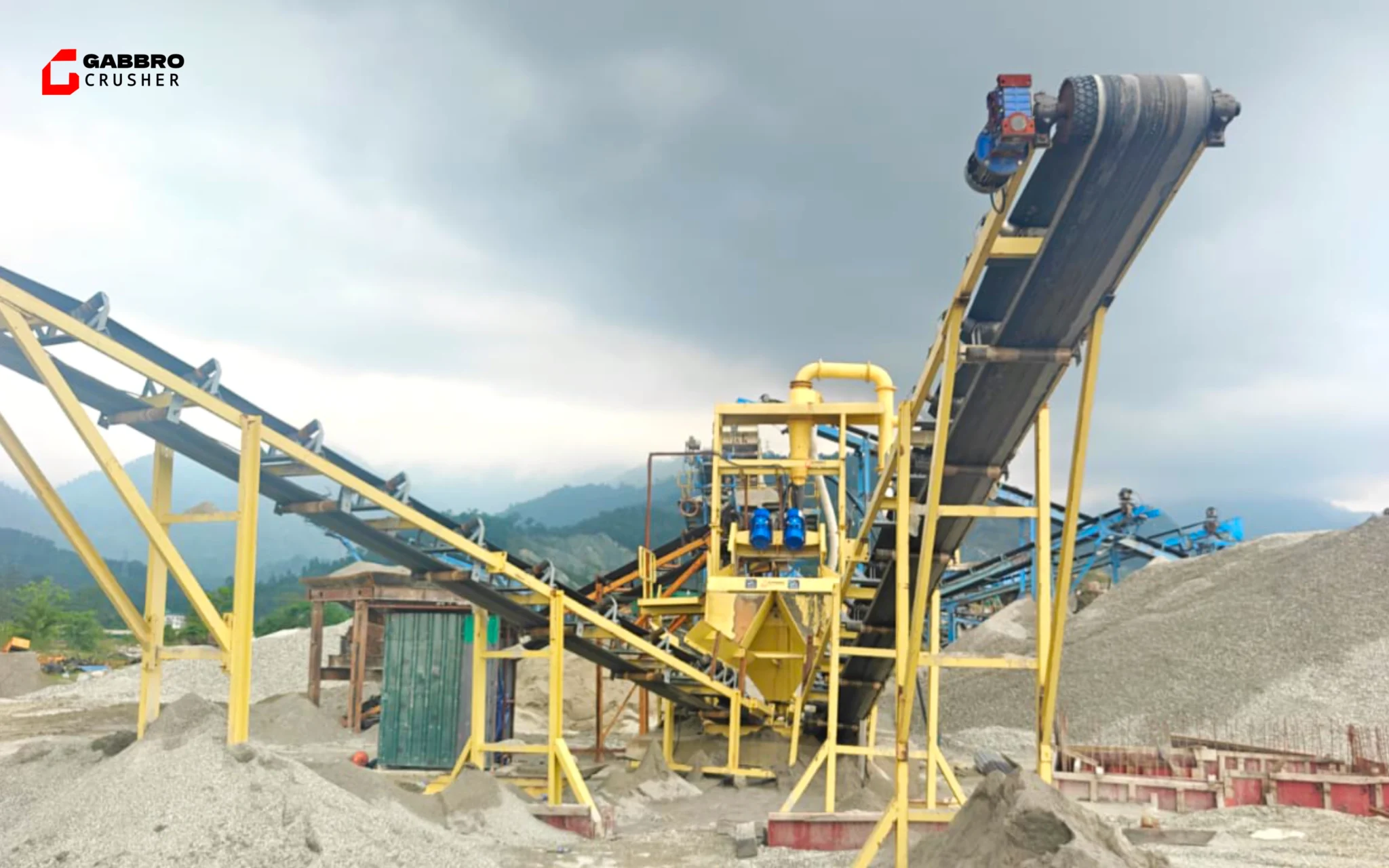
gabbro crusher sand making plant - vsi crusher manufacturer in india- Nepal- Bhutan - sand making machine - sand washing plant
Technical Guide

How a VSI Crusher Makes Sand —
And Why Washing Makes It Better

As a VSI crusher manufacturer in India, one of the most common questions we get from quarry operators and M-Sand plant owners across Northeast India, Nepal, and Bhutan is: "Can I produce M-Sand or P-Sand directly from a VSI crusher?" The short answer is — a VSI crusher alone produces raw crushed sand, not finished M-Sand or P-Sand. Here's what really happens inside a complete sand manufacturing circuit, and why the combination of a VSI crusher with a sand washing system is the industry standard for producing quality manufactured sand in India.

01
Raw Feed Material
Crushed stone (10–25mm) from jaw or cone crusher fed into VSI at controlled rate
02
GVSI Series VSI Crusher
High-speed rotor at 1500 RPM shapes and reduces material into cubical sand-sized particles
03
G Wash Sand Washer
Hydro cyclone removes dust, clay & excess fines → delivers IS 383 grade M-Sand or P-Sand
❌ VSI Crusher Alone
Raw Crushed Sand
— Low Quality
  • High dust content (10–15%)
  • Excess fines below 75 microns
  • Clay and silt contamination
  • Fails IS 383 grading limits
  • Rejected by concrete plants
  • Lower market price
✅ VSI + Sand Washer
Finished M-Sand / P-Sand
— Premium Quality
  • Dust content controlled below 3%
  • Fines within IS 383 Zone II limits
  • Clay and silt completely removed
  • Passes IS 383 grading requirements
  • Accepted by all concrete plants
  • Premium market price realised
Sand Quality — Before & After Washing
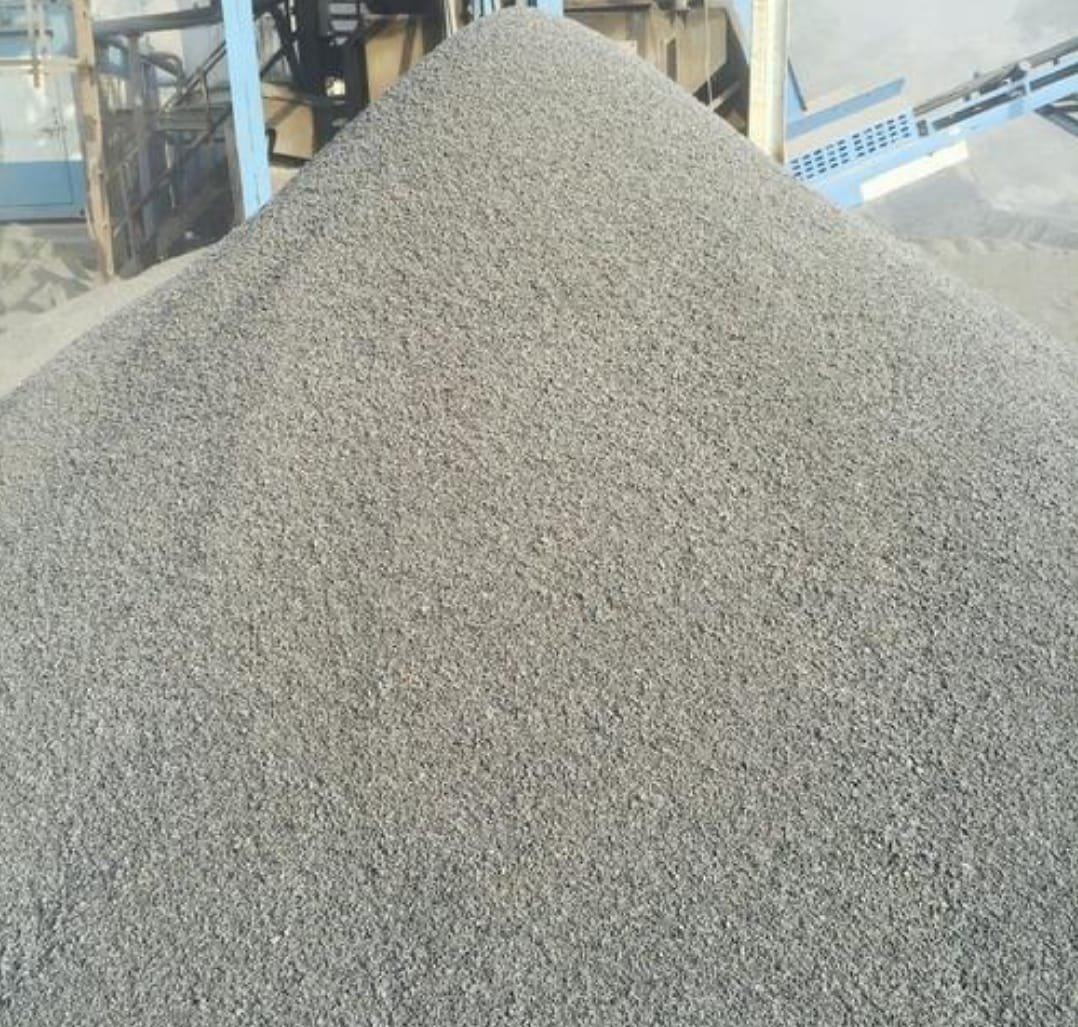
Raw VSI crushed sand high dust content before washing
❌ Before Washing
Raw VSI Crushed Sand
High dust content 10–18% · Fails IS 383 · Low market value · Not suitable for concrete
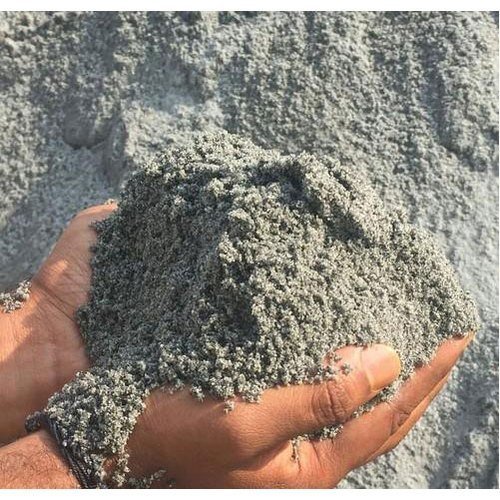
M-Sand manufactured sand after hydro cyclone washing IS 383 compliant
✅ M-Sand
Manufactured Sand (M-Sand)
Dust below 3% · IS 383 Zone II compliant · Ideal for concrete & RCC · Premium market price
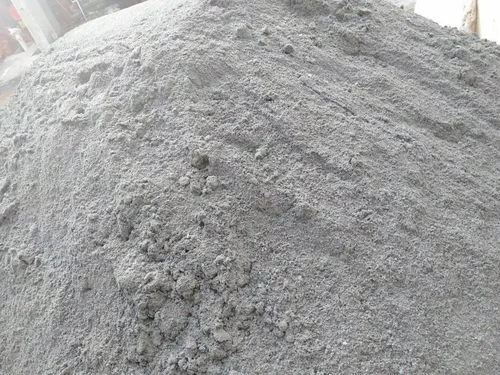
P-Sand plastering sand after hydro cyclone sand washing machine
✅ P-Sand
Plastering Sand (P-Sand)
Ultra-fine gradation · Smooth finish · IS 1542 compliant · Used for plastering & masonry

Note: All three sand types are produced using the same GVSI Series VSI crusher — the difference in quality is entirely determined by the downstream G Wash Series sand washing machine. Quarry operators across Northeast India, Nepal, and Bhutan use this combination to produce premium M-Sand and P-Sand that commands the best market price.

Why Every VSI Crusher Manufacturer in India Recommends Sand Washing

When raw feed material — typically 10mm to 25mm crushed stone — enters the GVSI Series VSI crusher, the high-speed rotor at 1500 RPM accelerates the material and impacts it against the rock-lined crushing chamber. This rock-on-rock impact produces well-shaped, cubical particles in the 0–6mm sand size range. However, the crushing process also generates a significant proportion of stone dust — ultra-fine particles below 75 microns — along with any clay or silt present in the original quarry rock.

In Northeast India, Nepal, and Bhutan — where granite, basalt, and quartzite are the dominant rock types — dust generation in the VSI crushing stage can be as high as 12–18% of total output. IS 383:2016 — the Indian Standard for manufactured sand — limits the total fines below 75 microns to a maximum of 15% for M-Sand (Zone II) and requires strict limits on clay content. Raw VSI-crushed sand almost always exceeds these limits without downstream washing.

This is why VSI crusher manufacturers in India — including Gabbro Crusher — always recommend pairing the GVSI Series VSI crusher with a G Wash Series Hydro Cyclone Sand Washing Machine. The hydro cyclone uses centrifugal force to separate and remove the excess dust, clay, and silt from the VSI output — delivering finished M-Sand or P-Sand that meets IS 383 grading requirements and commands the best market price at concrete batching plants, ready-mix concrete producers, and construction projects across India, Nepal, and Bhutan.

Quarry operators in Assam, Sikkim, Meghalaya, and Arunachal Pradesh who have installed the GVSI + G Wash combination consistently report a 25–40% improvement in their sand selling price compared to selling unwashed VSI output — making the investment in a sand washing system the single highest-return addition to any manufactured sand plant.

Complete Your Sand Making Plant

Pair your GVSI VSI Crusher with Gabbro Crusher's G Wash Series Sand Washing Machine — the complete M-Sand solution trusted across Northeast India, Nepal & Bhutan.

View G Wash Sand Washer →
GVSI Series VSI Crusher Manufacturer in India

VSI Crusher
FAQs

💎 Shaping, Cubicity & M-Sand Production
A VSI crusher improves cubicity through high-velocity impact that breaks material along its natural cleavage planes. The GVSI Series rotor accelerates feed material to tip speeds of 40–70 m/s — at this velocity, impact forces fracture flaky, elongated particles and reshape them into compact, cubical geometry. The result is aggregate with a flakiness index typically under 15% and elongation index under 20% — meeting IS 2386 requirements for premium concrete and asphalt production where particle shape directly affects mix workability and strength.
Yes — VSI crushers are the preferred machine for M-Sand production. The GVSI Series produces manufactured sand by operating at higher rotor speeds to maximise generation of fines below 4.75mm with ideal cubical particle shape. By optimising the cascading feed system, the GVSI consistently delivers M-Sand meeting IS 383 Zone II gradation standards — making it the ideal M-Sand crusher machine for quarry operators across India, Nepal, and Bhutan where river sand sourcing is increasingly restricted and construction-grade manufactured sand demand continues to grow rapidly.
The ideal feed material moisture for VSI crushing is under 2% to 3% by weight. Feed above this threshold becomes sticky, causing build-up inside the rotor ports and on the distributor plate — progressively blocking the feed opening and creating dangerous rotor imbalance. Severe build-up triggers high-vibration shutdowns and accelerates wear on all rotor components. For quarry operations during monsoon seasons, screen and pre-dry feed material before the GVSI stage to maintain consistent output and protect rotor balance.
⚙️ Rotor Dynamics & Configuration
Rock-on-Rock (ROR) uses a maintained rock shelf lining the crushing chamber — material ejected from the rotor impacts the rock bed rather than metal. This dramatically reduces wear costs in highly abrasive applications like granite, quartzite, and high-silica materials. Rock-on-Anvil (ROA) replaces the rock shelf with sacrificial metal anvils, increasing the reduction ratio for less abrasive materials like limestone and dolomite. The GVSI Series supports both configurations — ROR is recommended for M-Sand production from granite, while ROA suits aggregate shaping from softer stone.
The cascade system introduces a secondary material stream directly into the crushing chamber outside the rotor — bypassing the rotor entirely. This stream is crushed by the kinetic energy of material exiting the rotor at high velocity, effectively using energy that would otherwise be wasted. The result is significantly higher total throughput without increasing motor load or rotor speed. On the GVSI Series, the cascade ratio is adjustable — higher ratios increase overall capacity while moderating the percentage of sub-75-micron fines produced, giving operators full control over M-Sand gradation.
High vibration is almost always caused by rotor imbalance. The most common triggers are uneven wear on rotor tips — particularly when only some tips are replaced rather than all simultaneously — or a partially blocked rotor port restricting material flow asymmetrically. Other causes include oversized feed entering the rotor and material build-up on one side of the distributor plate. Always replace rotor wear parts in diametrically opposed pairs to maintain dynamic balance. If vibration exceeds normal levels, shut down immediately — continuing to operate an unbalanced rotor at 1500 RPM risks catastrophic bearing failure.
🛠️ Wear Parts & Cost Optimisation
Replacement interval depends entirely on material abrasiveness. For highly abrasive materials like granite and quartzite, tip life is typically 30–80 operating hours. For medium-abrasive materials like limestone, tips last 80–150 hours. Tungsten carbide insert tips extend life by 2–3x compared to standard chrome alloy tips in abrasive applications. Always inspect rotor tips at fixed intervals — every shift for hard rock — rather than waiting for visible failure. Worn tips reduce crushing efficiency, increase unwanted fines, and risk rotor imbalance if wear becomes asymmetric across the rotor.
Wear rate increases exponentially with rotor tip speed — not linearly. Doubling tip speed roughly quadruples the wear rate due to the kinetic energy relationship (KE = ½mv²). Even small increases in RPM beyond what is necessary result in disproportionately higher wear costs per tonne. The optimal strategy for the GVSI Series is to run the rotor at the minimum speed that achieves your required product gradation — typically 1500 RPM for standard M-Sand and aggregate shaping. Reduce speed during softer feed periods to maximise tip life and reduce cost per tonne.
The distributor plate sits at the centre of the rotor directly below the feed tube opening. Its primary function is to protect the rotor floor from direct impact damage as raw feed drops from the central hopper — without it, the rotor body suffers rapid erosive wear. Secondarily, it redirects incoming feed evenly outward into the rotor ports, ensuring symmetrical loading. A worn distributor plate causes asymmetric port loading, vibration, and accelerated port wear. It is a sacrificial wear component — inspect every 30–50 operating hours and replace when dish depth exceeds 15mm.
About Our VSI Crushers

Your Trusted VSI Crusher
Manufacturer in India

As a leading VSI crusher manufacturer in India, Gabbro Crusher has been designing and supplying the GVSI Series Vertical Shaft Impact Crusher since 2011 — serving manufactured sand plant operators, aggregate producers, and highway contractors across West Bengal, Northeast India, Nepal, and Bhutan. Every GVSI Series VSI crusher we manufacture is built for continuous high-speed operation at 1500 RPM — delivering consistent cubical product gradation with the lowest wear part cost per tonne.

Our VSI crusher manufacturing facility in India produces the GVSI Series in five models — GVSI 30, GVSI 50, GVSI 100, GVSI 150, and GVSI 250 — covering capacities from 20 TPH to 200 TPH to suit every plant size and production requirement. Whether you need a VSI crusher for an M-Sand plant in Northeast India, a vertical shaft impactor for aggregate shaping in Nepal, or a sand making machine for a highway project in Bhutan — Gabbro Crusher delivers with full installation support and after-sales service.

Looking for the best VSI crusher price in India? Contact Gabbro Crusher today for a free consultation and competitive pricing on the complete GVSI Series VSI crusher range. Our engineering team will help you select the right model for your feed material, required M-Sand gradation, and plant capacity — ensuring maximum productivity and lowest cost per tonne from day one.