
Quick contact info

Gabbro Crusher is a truly professional industrial company built to last. We deliver reliable gabbro crushing solutions for construction, infrastructure, and large-scale engineering projects.

icon_widget_image Monday-Saturday: 10 am to 6pm icon_widget_image H.O: Ground Floor, 50D, Muktaram Babu Street, Kolkata - 700 007 icon_widget_image +91 7004 247 461 +91 7644 940 911 icon_widget_image info@gabbrocrusher.com vikash@gabbrocrusher.com
vibrating screen manufacturer in India - gabbro crusher - GVS series Vibrating screen
GVS Series Vibrating Screen Manufacturer India — Gabbro Crusher
Screening & Classification

GVS Series
Vibrating Screen

Multi-Deck Aggregate Screening & Classification System

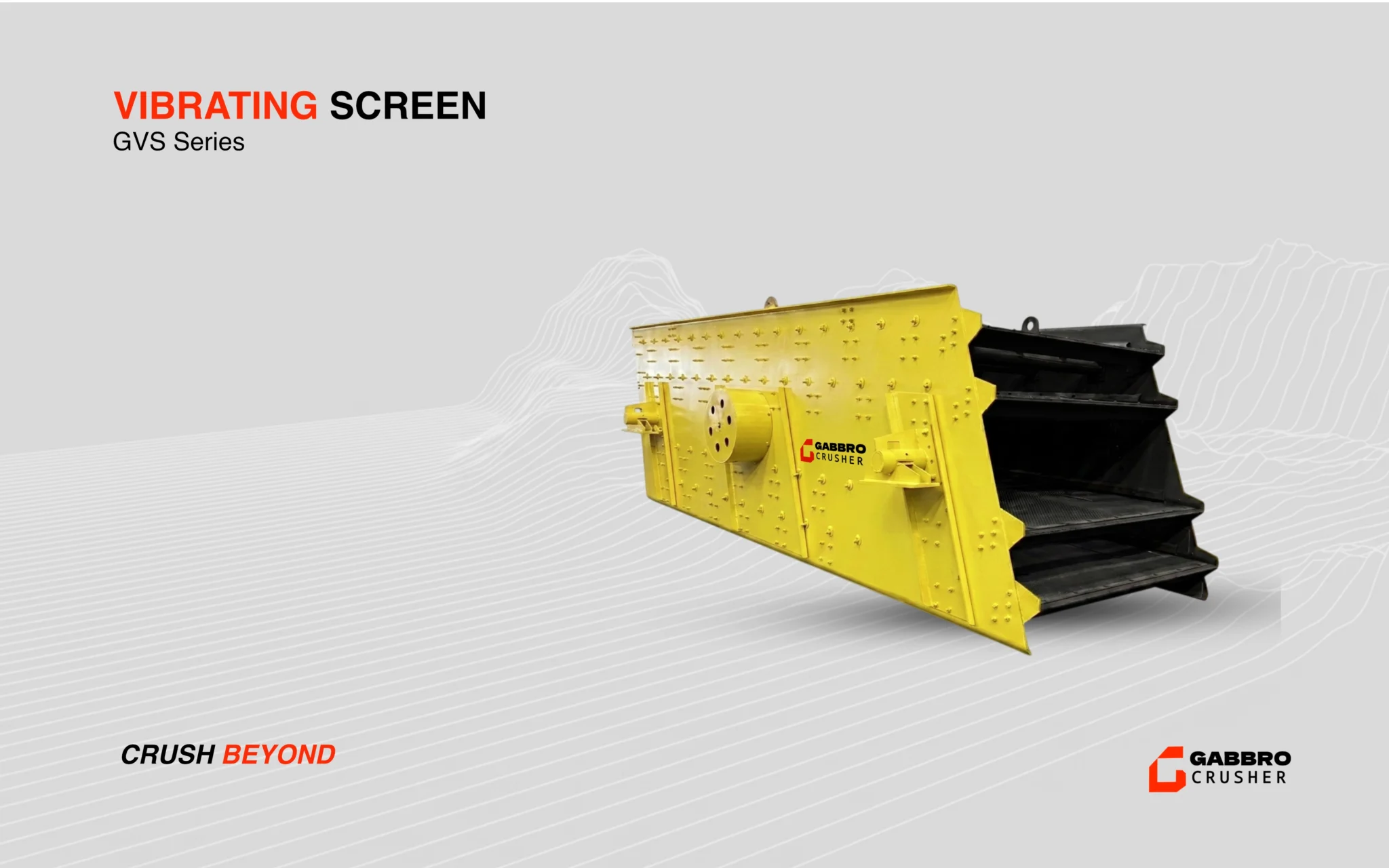
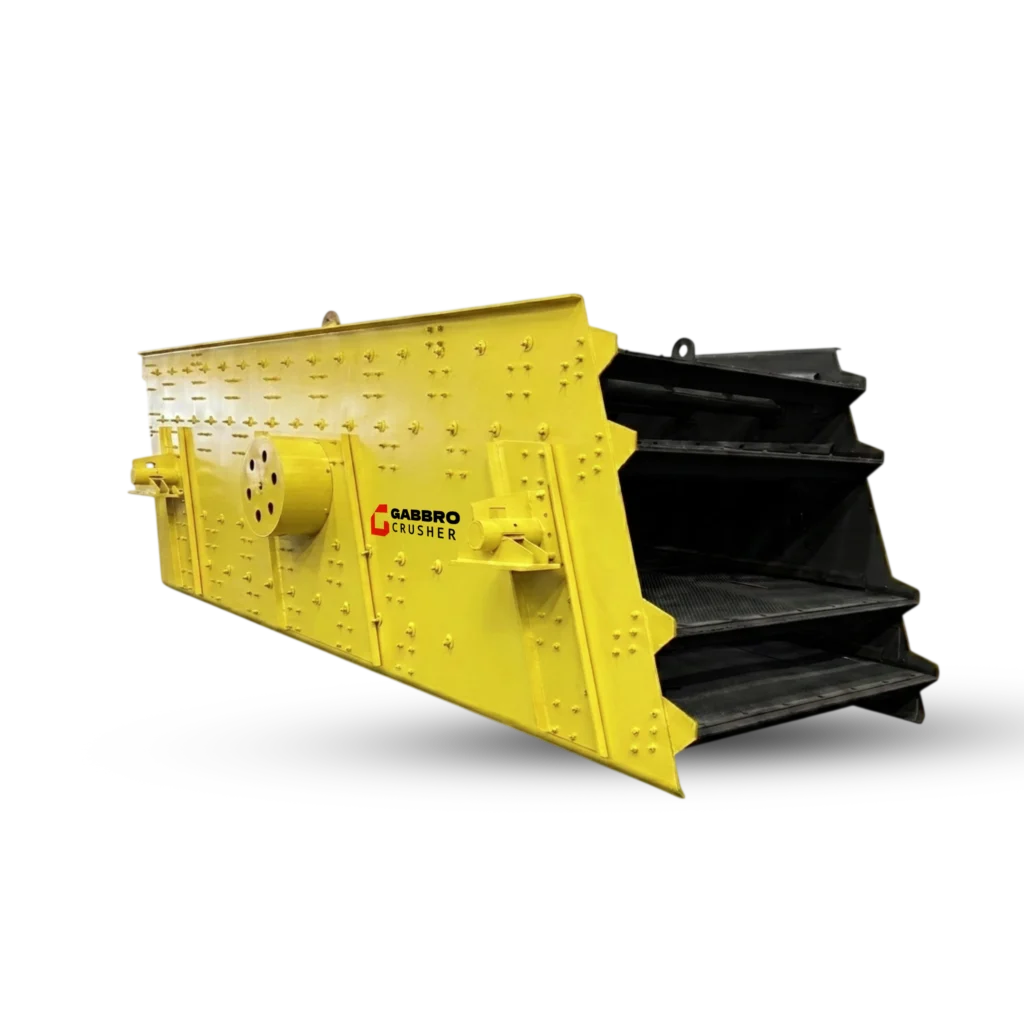
The GVS Series Vibrating Screen by Gabbro Crusher is a heavy-duty aggregate screening and classification machine engineered for continuous high-volume operation in stone crusher plants, quarrying, and sand processing units. Built on a robust reinforced steel frame with precision-balanced vibration, the GVS Series delivers accurate size separation across multiple output fractions — simultaneously — in a single pass through the screening deck.

Available in 2, 3, 4 and 5 deck configurations, the GVS Series gives plant operators complete control over output gradation — from coarse oversize removal to fine sand classification. Each deck can be independently fitted with woven wire mesh or polyurethane panels matched to the specific material and separation size required. The heavy-duty eccentric shaft drive ensures consistent G-force across the full screen width even under peak feed loads, maintaining high screening efficiency and minimal blinding in wet or sticky material conditions.

As a trusted vibrating screen manufacturer in India, Gabbro Crusher builds the GVS Series for quarry operators and plant contractors requiring reliable multi-fraction classification with low maintenance cost — delivering consistent output quality across granite, basalt, limestone, and river gravel processing operations across India, Nepal, and Bhutan.
Key Advantages of GVS Series Vibrating Screen

  • Multi-deck design — 2, 3, 4 and 5 deck configurations available
  • High screening efficiency with precision-balanced eccentric shaft drive
  • Heavy-duty reinforced steel frame for 24/7 continuous operation
  • Low blinding in wet and sticky material conditions
  • Interchangeable screen media — wire mesh or polyurethane panels
  • Consistent G-force across full screen width at all feed rates
  • Compact footprint — easy integration into existing crusher circuits
  • Low maintenance with accessible bearing housings and panel fixing

Where Is GVS Vibrating Screen Used?

Stone Crusher Plants Aggregate Classification Sand Processing Units Quarrying Operations Road Construction Railway Ballast Screening Mining Operations Concrete Production Plants
Technical Data

GVS Series Vibrating Screen
Technical Specifications

All GVS Series Vibrating Screens are manufactured to order. Deck configurations — 2, 3, 4 and 5 deck — available on all models except GVS 0804 which is available in 2 and 3 deck only. Specifications are subject to change without notice. Contact Gabbro Crusher for custom configurations.

Model Screen Size L × W (mm) Deck Options No. of Decks Capacity (TPH) Power (HP)
GVS 0804 2440 × 1220 2 / 3 Deck 15 – 25 10
GVS 1004 3050 × 1220 2 / 3 / 4 / 5 Deck 20 – 40 10
GVS 1205 3660 × 1520 2 / 3 / 4 / 5 Deck 40 – 50 15
GVS 1505 4570 × 1520 2 / 3 / 4 / 5 Deck 50 – 100 25
GVS 1605 4880 × 1520 2 / 3 / 4 / 5 Deck 100 – 150 25
GVS 1805 5490 × 1520 2 / 3 / 4 / 5 Deck 120 – 180 30
GVS 2005 6100 × 1520 2 / 3 / 4 / 5 Deck 150 – 220 35
GVS 2205 6700 × 1520 2 / 3 / 4 / 5 Deck 200 – 280 40
GVS 2206 6700 × 1830 2 / 3 / 4 / 5 Deck 200 – 280 40

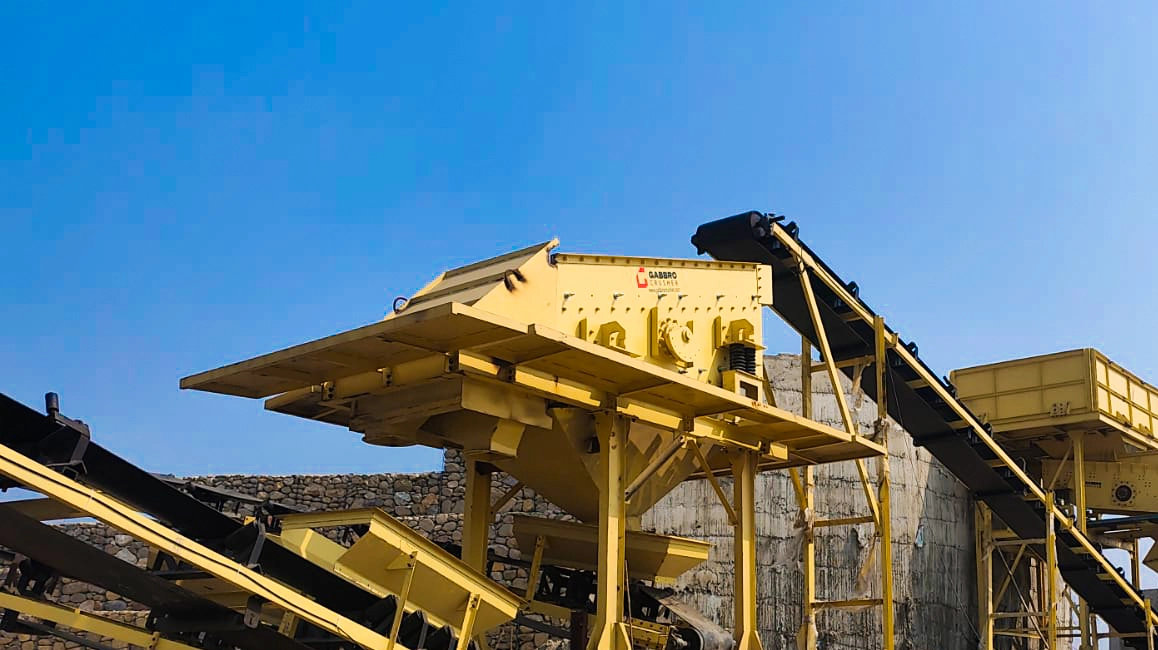
PROJECT SITE GALLERY

Vibrating screen manufacturer in India- gabbro crusher GVS Series
Expert Answers

Vibrating Screen
FAQs

⚙️ How It Works & Selection
A vibrating screen separates aggregate into multiple size fractions simultaneously. Feed material is introduced onto the top deck and carried forward by the vibrating motion. Oversized material travels along the deck and discharges at the end, while undersized material passes through to the next deck below. In a stone crusher plant, GVS Series vibrating screens are used after the jaw crusher and cone crusher to classify output into commercial sizes — typically 0-6mm, 6-12mm, 12-20mm, and 20-40mm fractions in a single pass.
The number of decks determines how many output fractions you produce in one pass. A 2 deck screen produces 3 products, a 3 deck produces 4, a 4 deck produces 5, and a 5 deck screen produces 6 simultaneous output fractions. More decks allow finer classification without additional machines. For standard quarry operations producing 3-4 commercial sizes, a 3 or 4 deck GVS Series is most efficient. For M-Sand or specialised aggregate production requiring tight gradation control, the 5 deck configuration delivers maximum output precision from a single machine.
Screen selection is based on three factors: required throughput in TPH, number of output fractions needed, and the smallest separation size required. Finer separations require more screen area per TPH. For a 100 TPH crusher plant producing 3 commercial sizes, the GVS 1605 with 3 or 4 deck is typically appropriate. For 200 TPH operations, the GVS 2205 or GVS 2206 with 4 or 5 deck is recommended. Contact Gabbro Crusher's engineering team with your required TPH, feed gradation, and output sizes for a precise model recommendation.
🛠️ Maintenance & Troubleshooting
Blinding occurs when near-size particles wedge into mesh apertures, blocking them and reducing screening efficiency. Main causes are high moisture content, high proportions of near-size particles, incorrect mesh tension, and insufficient G-force. Pegging — where elongated particles lock across apertures — is common with flaky aggregate. Solutions include polyurethane panels for wet materials, increasing stroke amplitude, and pre-screening wet fines. The GVS Series eccentric shaft drive maintains consistent G-force at all feed rates to minimise blinding in typical quarry conditions.
Vibrating screen bearings typically have a service life of 8,000 to 15,000 operating hours depending on speed, load, lubrication quality, and seal condition. In continuous quarry operation running 10-12 hours per day, this is approximately 2-4 years between replacements. Always use high-viscosity bearing grease specified for vibrating screen applications — standard greases break down rapidly under high-frequency vibration. Monitor bearing temperature regularly — a rise above 20°C from baseline indicates lubrication issues. Replace seals immediately if any dust or moisture ingress is detected.
💧 Screen Media & Wet Screening
Wire mesh is the standard choice for dry aggregate screening — high open area, low cost, suitable for most granite, basalt, and limestone applications. Polyurethane panels are preferred for wet or sticky material, fine separations below 6mm, and high-abrasion applications — lasting 8-10x longer than wire mesh in abrasive conditions. The GVS Series supports both media types on all decks. Operators can mix media across decks — wire mesh on upper coarse decks, polyurethane on lower fine decks — to optimise cost and performance for each separation size.
Yes — with modifications. For aggregate with surface moisture up to 4%, standard wire mesh on the GVS Series performs adequately. Above 4% moisture — typical during monsoon season quarry operations — polyurethane panels on lower fine decks are strongly recommended to prevent blinding. A water spray bar system can be added above the decks to convert to wet screening, flushing fines through more efficiently. For consistently wet feed, pair the GVS Series with the G Wash Hydro Cyclone Sand Washer for complete wet processing and fines recovery in a single plant circuit.
Yes. Gabbro Crusher supplies the GVS Series Vibrating Screen across India, Nepal, and Bhutan with full installation support and after-sales service. The GVS Series is designed for the rock hardness, operating conditions, and aggregate specifications common across South Asian quarrying and infrastructure projects. Contact our engineering team for project-specific model selection, deck configuration, and pricing.
About Our Vibrating Screens

Your Trusted Vibrating Screen
Manufacturer in India

As a leading vibrating screen manufacturer in India, Gabbro Crusher has been designing and supplying the GVS Series vibrating screens since 2011 — serving quarry operators, aggregate producers, and stone crushing plant contractors across West Bengal, Northeast India, Nepal, and Bhutan. Every GVS Series vibrating screen we manufacture is built for continuous high-volume screening operation with minimal maintenance and consistent multi-fraction classification accuracy.

Our vibrating screen manufacturing facility in India produces the GVS Series in 2, 3, 4, and 5 deck configurations — covering a wide range of aggregate classification requirements from fine sand screening to coarse rock separation. Whether you need a vibrating screen for a stone crushing plant in Northeast India, a multi-deck classification screen for an aggregate plant in Nepal, or a heavy-duty screening solution for a quarry in Bhutan — Gabbro Crusher delivers with full installation support and after-sales service.

Our GVS Series vibrating screen manufacturer in India uses precision-balanced eccentric shaft drives and interchangeable woven wire mesh or polyurethane screen panels — ensuring high screening efficiency with low blinding even in wet or sticky rock material conditions. The heavy-duty reinforced steel frame handles continuous 24/7 operation in the most demanding quarry and mining environments across India, Nepal, and Bhutan.

Looking for the best vibrating screen price in India? Contact Gabbro Crusher today for a free consultation and competitive pricing on the complete GVS Series vibrating screen range. Our engineering team will help you select the right deck configuration, screen panel type, and drive specification for your feed material, required separation sizes, and plant capacity — ensuring maximum screening efficiency and lowest cost per tonne from day one.